Stop Broadcasting Into the Void: How Analytics and Track Logs Transform Your Web Radio Station
Say goodbye to manual royalty reporting. Discover how automated track history logs and deep listener analytics can save you hours of administrative work and help you program a highly successful station.
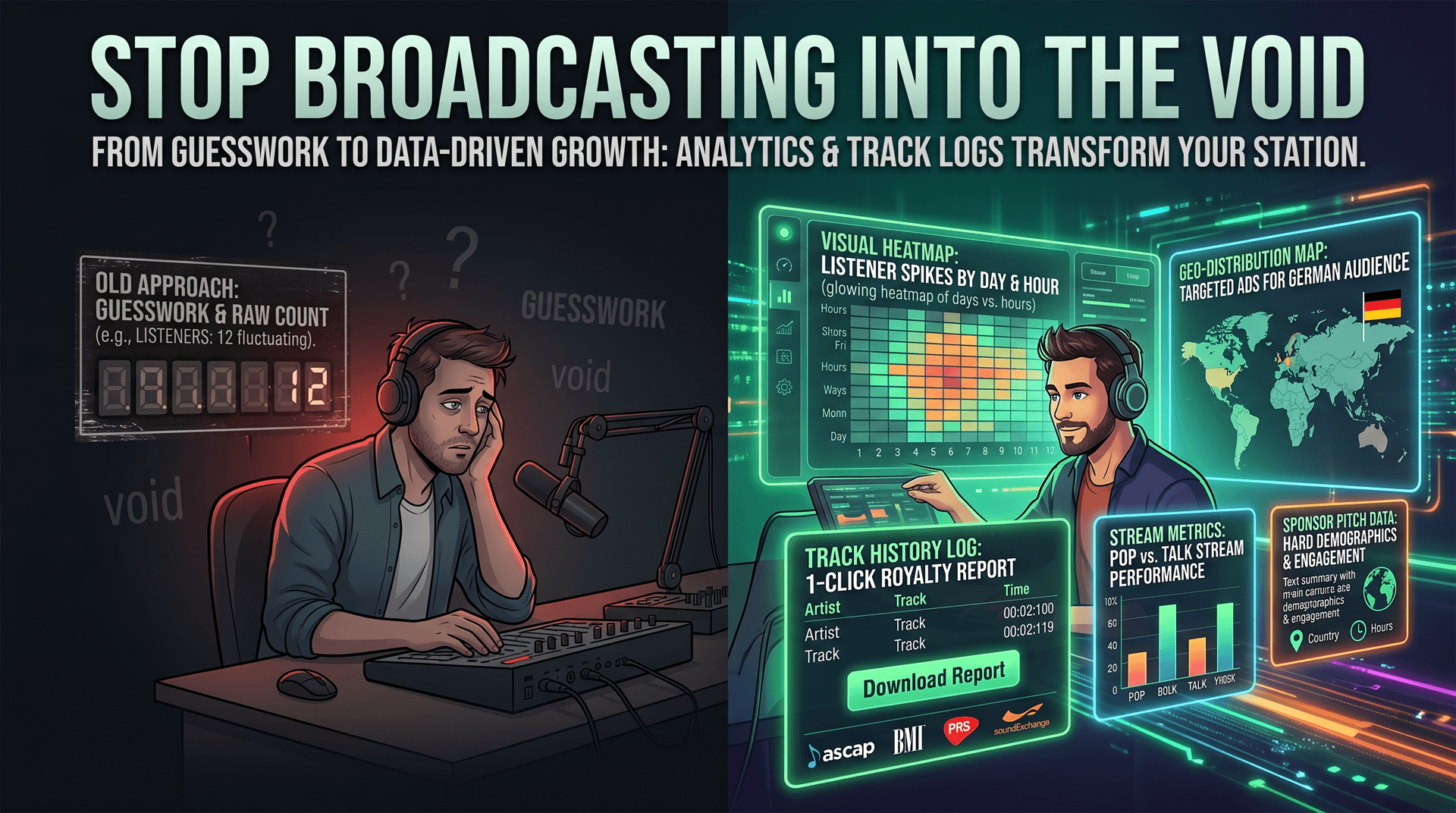
Many internet radio station owners operate in the dark. You spend hours curating playlists, scheduling live shows, and promoting your stream, but when you look for feedback, all you have is a raw, fluctuating "current listeners" number.
Worse, at the end of the month or quarter, you are faced with the daunting task of piecing together track logs to submit to licensing organizations.
Operating without deep data doesn't just stunt your station's growth; it creates hours of unnecessary administrative work. Here is how upgrading to a data-rich web player platform can eliminate your reporting headaches and help you program a highly successful station.
1. The Agony of Royalty Reporting (And the 1-Click Fix)
If you hold a commercial broadcasting license, you know that paying your fees is only half the battle. Licensing organizations (like ASCAP, BMI, PRS, or SoundExchange) frequently require detailed reporting of exactly what you played, including the artist, track title, and the exact date and time of the broadcast.
Trying to manually extract this data from raw server logs or broadcasting software after the fact is a massive drain on your time.
- The Solution: A modern player platform tracks your metadata automatically. Look for a system that allows you to select a specific date range and instantly download a complete, formatted track history log (including day, time, artist, and track title). What used to take hours of formatting can be done in seconds, keeping you perfectly compliant.
2. Programming by the Numbers, Not by Gut Feeling
You might think your Friday night jazz block is your most popular show, but do the numbers actually back that up?
Without historical data, station owners are forced to guess what their audience wants. To grow, you need to treat your station like a digital product. You need to know exactly when your listeners tune in, when they drop off, and which specific audio streams (if you offer multiple genres) perform the best.
| The Guesswork Approach | The Data-Driven Approach |
| Checking your listener count randomly throughout the day. | Reviewing a visual heatmap of listener spikes by day and hour. |
| Assuming your morning show is a hit. | Tracking exactly how many listeners switch from your Pop stream to your Talk stream at 8:00 AM. |
| Pushing ads on local social media. | Discovering you have a massive listener base in Germany and running targeted ads there. |
3. Pitching to Sponsors with Confidence
When you approach local businesses or digital sponsors to buy banner space on your public page or audio ads on your stream, they are going to ask for proof of ROI (Return on Investment). A simple "we have a lot of listeners" won't close the deal.
Sponsors want hard demographics. When you have access to an analytics dashboard that proves your station has a dedicated, recurring listener base in specific geographic locations during specific hours, you transition from asking for a favor to offering a highly targeted advertising opportunity.
Treat Your Station Like a Business
You cannot grow what you do not measure. At Web Radio Players, we built a comprehensive analytics suite directly into your dashboard.
Track your listeners by country, monitor your multiple streams, view engagement heatmaps, and download your complete track broadcast history with a single click.
Stop guessing, stop struggling with spreadsheets, and start growing.
Track logs and listener analytics sit in the same dashboard as the player. See HTML5 player and hosted-page features, then pricing.